A common story
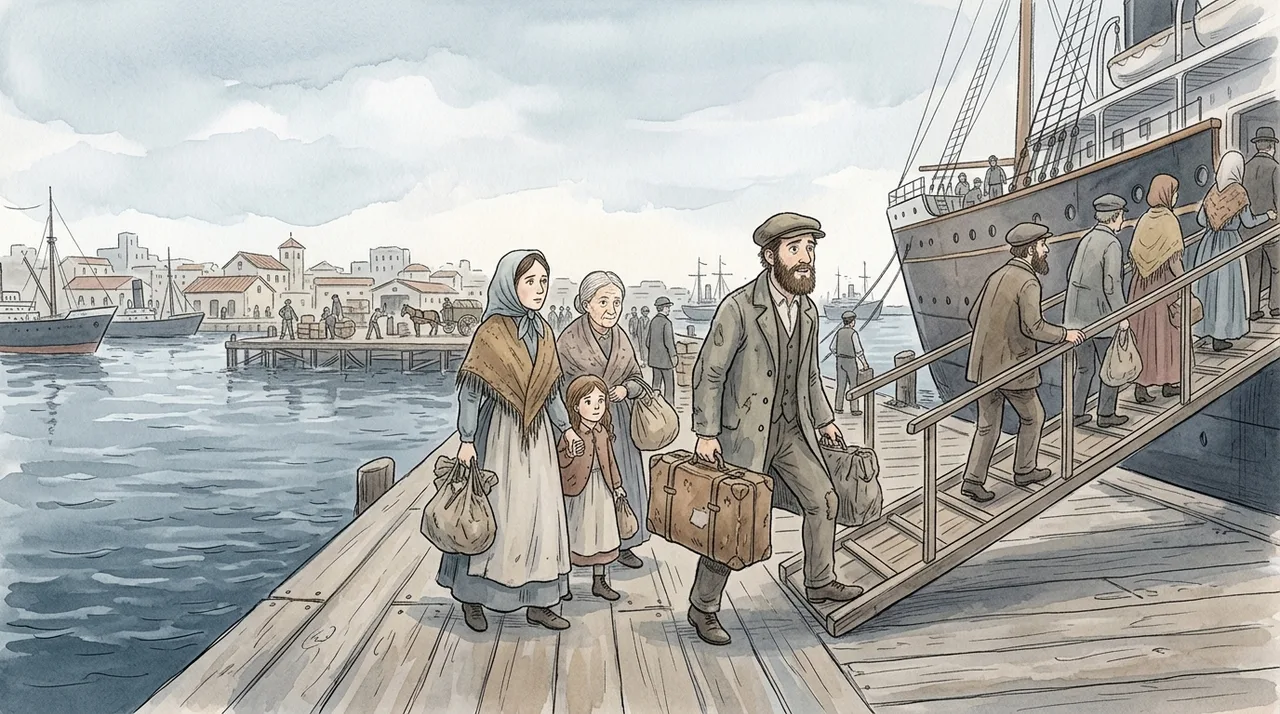
They got off the boat. America at last. Here all men are equal. They had to learn the language, work hard to get ahead. They came from a religious household (who in that small town wasn't?).
In Argentina it was easier to set religion aside, but back home the traditions were kept up.
Things were getting better, the children grew up healthy, they studied, they knew nothing of discrimination. The parents kept the past alive by gathering with their countrymen at the fareim.
Of course the children were Jewish, but what did they know of Judaism?
Religion, NO, we're socialists, we fight for equality.
That much, though, was kept, the holidays were observed, how? With the traditional dinner, of course, but with no religious content.
The older generation gave way to the new one, professionals, prosperous industrialists, in short, country-club people.
Where was Judaism left? In donations to the campaign; joined together as members of some Jewish institution and in some cases sending their children to Jewish schools.
But the children began to ask questions, to press their grandparents, who couldn't understand this third generation that was turning back the pages of time.
In one of these families, night fell, and one of the children disappeared.
When they tried to reach people they knew to find out his whereabouts, the answer was, "He's Jewish, they won't find him, and with that last name, there's no saving him."
The desperate parents reproached God, blamed Him for abandoning them; but really, who abandoned whom?
They understood, they searched their history for a truth they had forgotten.
They had never thought that the Torah was a model of a social contract, that it taught respect for those who have the least, that it punished excessive ambition, and that, strange as it might seem, it was more socialist than they were. Because it's a social contract far superior to the ones we have today.
Little by little the grief drew the family closer together, and now they understood that forgetting their origins was not the way to live better.
Today the grandchildren talk of emigrating, but this time they aren't looking for economic progress, nor fleeing discrimination. They want to go to Israel, a different country, with another language, other customs, but something tells them it's theirs. The parents wouldn't have understood this before the family was amputated.
They thought their children had everything, economic well-being, education, a good family; but what they lacked was identity.
That word is so simple and so hard to explain.
This little story is the story of many Jews who arrived in Argentina around 1900, disillusioned and disappointed with the world, hoping for a better future.
Today there's a very large Argentine colony in Israel, and let's hope their children have recovered their identity and never have to emigrate again.
Raquel Kacman