What is eating
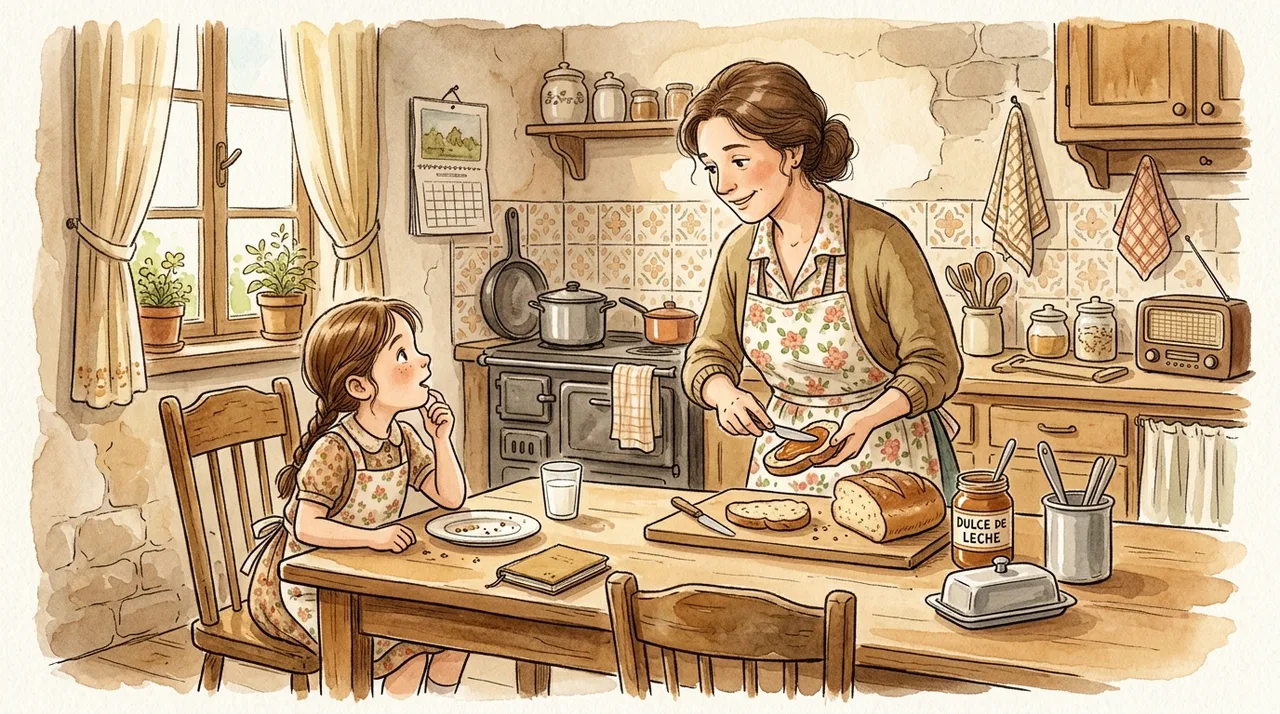
Julieta is 5 years old, she's very smart and corners her mother with questions, which she doesn't always know how to answer. «Julieta, mommy, what is eating?» Rita, the mother: «Putting something in your mouth and chewing.»
«Isn't milk food?» «Yes, but you don't chew it, you drink it.»
«Then why do they ask for milk for kids who don't have food, can I send them bread with jam so they can chew?» «Well, right now I have a lot to do, we'll talk later.»
«Ugh, I don't know how to send it, you always leave me hanging.»
Rita was left thinking about the kids who have no food and about all the food that gets wasted in the country, she remembered that many years ago she saw, in Tigre, 2 people throwing the contents of huge baskets, full of plums, into the river. Since she knew them as they were neighbors on a relative's island, she asked them why they were throwing into the river what could be eaten. They told her they'd spent the night harvesting the fruit and it got late, at the Tigre Fruit Market they'd rejected it because too much plum had come in and if they accepted it they'd have to lower the prices. I asked why they didn't go out and sell it themselves in poor neighborhoods, or give it away.
«It's forbidden, if they see us get off the boat they'll arrest us and never take fruit from us again.» They were watched until they were seen throwing the fruit away. I thought about what bureaucracy is. I, who know this story, understand why we produce food for millions of people and in our own country there are populations going hungry and malnourished children. How to explain this to a 5-year-old girl who offers to share her bread with another hungry child.
If the bureaucrats had hearts instead of numbers to add and subtract and could harvest the smiles of happy children instead of positive numbers on the books. It would change the world and especially Argentina. This is a tribute to childhood innocence.
Raquel Kacman